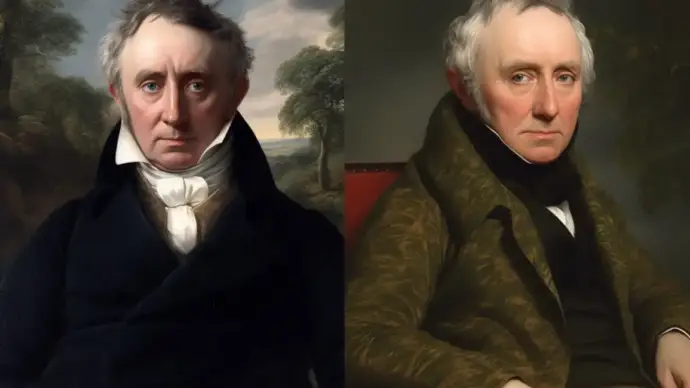
Romantic poets transformed English-language poetry through imagination, nature, revolution, childhood, memory, the supernatural, political liberty, artistic freedom, and the authority of individual experience. Their work emerged across the late eighteenth and early nineteenth centuries and developed through argument, friendship, rivalry, publication networks, travel, war, and social change. The Poets directory places the movement within the longer historical map.
This guide introduces eight major Romantic-era poets: William Blake, William Wordsworth, Samuel Taylor Coleridge, Lord Byron, Percy Bysshe Shelley, John Keats, Charlotte Smith, and Felicia Hemans. Each profile identifies formal contribution, central ideas, essential works, and a practical starting point. Readers seeking poems about romantic love can continue to Famous Love Poems.
What Does Romantic Mean in Poetry?
Romantic poetry belongs to a historical literary movement. The capitalized term Romantic refers to writing shaped by debates about imagination, nature, revolution, memory, childhood, freedom, the sublime, industrial change, and the limits of reason. Lowercase romantic poems usually refers to poems about love and relationships.
The two meanings overlap in individual works, though they describe different reading paths. Byron, Shelley, Keats, Wordsworth, and other Romantic poets wrote about desire, marriage, loss, and intimacy; their historical importance also reaches far beyond love poetry.
When Was the Romantic Period?
British Romanticism is commonly placed from the late eighteenth century into the 1830s. Dates vary because literary movements develop gradually. The publication of Lyrical Ballads in 1798 remains a major landmark, while earlier work by Blake, Smith, Burns, Cowper, and others already carried crucial Romantic energies. The wider national chronology continues through English Poets.
The period was shaped by the American and French Revolutions, the Napoleonic Wars, abolitionist debate, industrialization, urban expansion, new print markets, religious controversy, and changing ideas of nation and empire.
First and Second Generations
Literary history often divides the English Romantic poets into two broad generations. Wordsworth, Coleridge, and Blake belong to the earlier formation. Byron, Shelley, and Keats belong to the younger generation. The distinction clarifies chronology while leaving room for substantial differences within each group.
Women poets, laboring-class poets, Scottish and Irish writers, abolitionist voices, and popular authors were central to the period. Charlotte Smith and Felicia Hemans reveal how sonnet revival, sensibility, war, exile, domestic history, and public readership shaped Romantic poetry alongside the familiar six male names.
Major Romantic Poets
William Blake
Formal contribution: illuminated books joining poetry and visual art, prophetic myth, song forms, satire, and radical symbolic systems. Major ideas: innocence and experience, institutional oppression, imagination, childhood, religion, revolution, and creative vision. Essential works: Songs of Innocence and of Experience, The Marriage of Heaven and Hell, and “London.” Start here: compare “The Lamb” with “The Tyger” and track how paired songs complicate innocence.
William Wordsworth
Formal contribution: meditative blank verse, common language, ballad, sonnet, autobiographical epic, and lyric memory. Major ideas: nature, childhood, imagination, ordinary life, revolution, moral feeling, and the growth of consciousness. Essential works: “Tintern Abbey,” “I Wandered Lonely as a Cloud,” the Immortality Ode, and The Prelude. Start here: read “Tintern Abbey” as a poem about landscape, memory, change, and companionship.
Continue to the complete William Wordsworth poems guide.
Samuel Taylor Coleridge
Formal contribution: supernatural narrative, conversation poem, symbolic landscape, philosophical criticism, and psychological drama. Major ideas: imagination, guilt, isolation, faith, dream, nature, addiction, and the supernatural. Essential works: “The Rime of the Ancient Mariner,” “Kubla Khan,” “Christabel,” and “Frost at Midnight.” Start here: read “Frost at Midnight” beside “The Ancient Mariner” to compare intimate meditation with visionary narrative.
The partnership and differences between Coleridge and Wordsworth are examined in Romanticism in Wordsworth and Coleridge.
Lord Byron
Formal contribution: satirical ottava rima, verse tale, dramatic persona, travel poetry, and the self-conscious Byronic hero. Major ideas: liberty, celebrity, exile, desire, hypocrisy, war, performance, and political rebellion. Essential works: Don Juan, Childe Harold’s Pilgrimage, “She Walks in Beauty,” and “When We Two Parted.” Start here: read a canto of Don Juan to experience Byron’s speed, wit, narrative interruption, and moral irony.
Percy Bysshe Shelley
Formal contribution: lyrical drama, political ode, visionary sequence, terza rima, and musical abstraction. Major ideas: political liberty, change, imagination, love, atheism, nonviolence, nature, and poetic power. Essential works: “Ode to the West Wind,” “To a Skylark,” Prometheus Unbound, and “Mont Blanc.” Start here: follow the five-part movement of “Ode to the West Wind” from natural force to poetic invocation.
John Keats
Formal contribution: sensuous ode, sonnet, romance, narrative poem, and a lyric capable of sustaining uncertainty. Major ideas: beauty, mortality, imagination, art, desire, melancholy, and negative capability. Essential works: “Ode to a Nightingale,” “Ode on a Grecian Urn,” “To Autumn,” and “Bright star.” Start here: read the major odes as distinct encounters with art, song, season, pleasure, and death.
Continue to the complete John Keats poems guide.
Charlotte Smith
Formal contribution: revival and transformation of the English sonnet, melancholy landscape, autobiographical pressure, and political reflection. Major ideas: exile, confinement, nature, legal injustice, memory, war, and sensibility. Essential work: Elegiac Sonnets. Start here: read several sonnets in sequence and notice how landscape becomes a structure for personal and political feeling.
Felicia Hemans
Formal contribution: public lyric, historical scene, domestic elegy, song, and dramatic representation of national memory. Major ideas: home, exile, war, women’s sacrifice, family, empire, faith, and remembrance. Essential works: “Casabianca,” “The Homes of England,” and Records of Woman. Start here: read her historical and domestic poems together to see how public memory enters private feeling.
Major Themes of Romantic Poetry
| Theme | Representative poets | What to notice |
|---|---|---|
| Nature and consciousness | Wordsworth, Coleridge, Shelley, Smith | Landscape as perception, memory, force, refuge, terror, and philosophical problem. |
| Imagination and vision | Blake, Coleridge, Keats, Shelley | Dream, symbol, creative power, uncertainty, and altered perception. |
| Revolution and liberty | Blake, Wordsworth, Byron, Shelley | Political hope, disillusionment, resistance, war, and individual freedom. |
| Childhood and memory | Blake, Wordsworth, Coleridge | Origins of perception, lost states, education, and adult recollection. |
| Love, desire, and loss | Byron, Shelley, Keats, Hemans, Smith | Intimacy, separation, constancy, exile, mourning, and social pressure. Continue to Rhyming Love Poetry for the afterlife of audible form. |
Essential Romantic Poems and Books
Readers building a library can continue to Love Poetry Books for editions and collections that extend the period’s influence.
- Songs of Innocence and of Experience — William Blake
- Lyrical Ballads — William Wordsworth and Samuel Taylor Coleridge
- “Lines Composed a Few Miles above Tintern Abbey” — Wordsworth
- “The Rime of the Ancient Mariner” — Coleridge
- Don Juan — Lord Byron
- “Ode to the West Wind” — Percy Bysshe Shelley
- “Ode to a Nightingale” and “To Autumn” — John Keats
- Elegiac Sonnets — Charlotte Smith
- Records of Woman — Felicia Hemans
Women and the Romantic Period
Women poets shaped Romanticism through sonnet revival, abolitionist writing, historical narrative, domestic lyric, political argument, religious poetry, and the expanding literary marketplace. Charlotte Smith, Felicia Hemans, Anna Laetitia Barbauld, Mary Robinson, Joanna Baillie, Letitia Elizabeth Landon, and others wrote for substantial readerships and influenced the forms through which the period understood feeling and history.
Reading Romanticism through this wider field clarifies that the movement developed through many genres and publishing networks. The familiar canon becomes more accurate when public popularity, periodical culture, theater, education, translation, and women’s authorship enter the account. Continue through Women Poets for the longer history of authorship and canon formation.
The Legacy of the Romantic Poets
Romantic poetry changed later writing about nature, selfhood, revolution, childhood, artistic vocation, psychological conflict, and the nonhuman world. Victorian poets inherited its forms and problems; modernists reacted against its rhetoric while returning to its fragments, symbols, and dramatic voices; contemporary poets continue to revise its ideas of landscape, ecology, freedom, and lyric identity. Follow those revisions in Contemporary Poets.
Authoritative Reading Paths
- Poetry Foundation: An Introduction to British Romanticism — poets, poems, and historical context.
- British Library: Romantics and Victorians — manuscripts, essays, and period materials.
- Wordsworth Grasmere — collections and research on Wordsworth, Dorothy, and their circle.
Questions About Romantic Poets
Who are the major Romantic poets?
Major British Romantic poets include William Blake, William Wordsworth, Samuel Taylor Coleridge, Lord Byron, Percy Bysshe Shelley, John Keats, Charlotte Smith, and Felicia Hemans.
Who are the six best-known male Romantic poets?
The traditional six are Blake, Wordsworth, Coleridge, Byron, Shelley, and Keats. A fuller account of the period also includes women poets, Scottish and Irish writers, abolitionist voices, and popular authors.
Are Romantic poets the same as poets who write love poems?
The historical Romantic movement covers nature, imagination, revolution, childhood, freedom, art, and many other subjects. Romantic poets also wrote important poems about love and desire.
Which Romantic poet should a new reader start with?
Wordsworth offers a strong entrance through nature and memory; Keats through beauty and mortality; Blake through visionary symbolism; Byron through satire; Coleridge through supernatural narrative.